Mongolia: Yolin Am (Gobi)
An adventurous day exploring the Gobi region from icy crevasse floors to hot sandy dunes. The librarians joined us at 10 a.m. to go to the natural museum — a small building but with many shops at which we thoroughly enjoyed ourselves. I finally found myself a reasonably sized and priced Mongolian jacket, locally made of course.
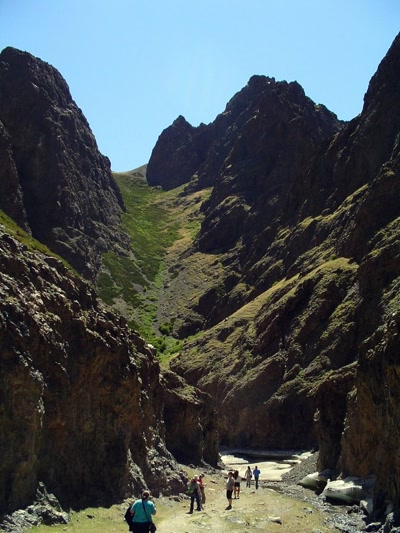
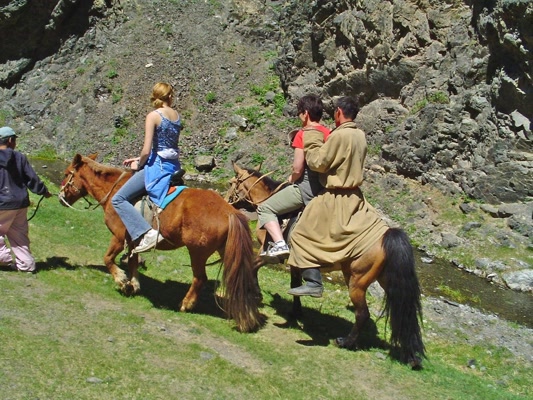
The museum contained the entrance to a national park. Mountains surrounded us on both sides, dark and severe, foreboding and looming high above but beautiful at the same time. When we stopped we were greeted by several Mongolians dressed traditionally asking us if we wished to ride horseback through the mountains. Several of us could not resist, and a small elderly lady in a red deel claimed me for her brown horse. The ride was peaceful, walking beside a small babbling stream alternating from somewhat grassy dirt to grey peddle and stone makeshift path. They brought us nearly to the ice sheets, the small marmots and fast running birds opting for the sunnier grassier areas of the crevasse pathway.
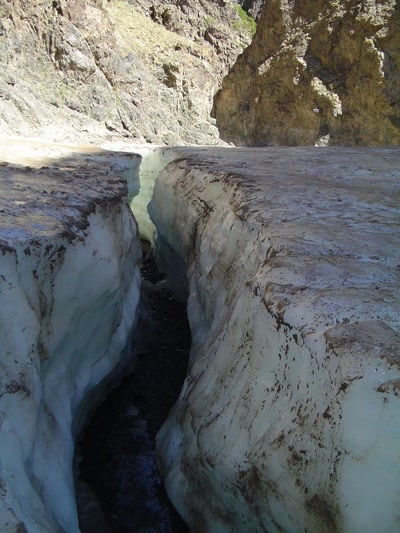
Two men sat on the ice carving animals that could be found in the mountains. When several of our party’s members found the ice difficult, they promptly and chivalrously joined us to assist those less acquainted with walking on ice. Below the ice the stream fought its way between the mountains, eroding the ice to display whites and blues as if an opascent agate. It was a marvelous and startling discovery to see ice in the desert, but with the high mountainous peaks it made sense that not much sunlight or even indirect sunlight could reach the crevasse floor. For their kindness I felt compelled to purchase one of their nice carvings, an argali.
One of the librarians had family who worked at the museum and lived not more than half a kilometer from the entrance, so they generously shared their ger with us for lunch. They offered milk tea and cooked up meat in a large pot, followed by yoghurt donated by the museum’s owner. The people are truly wonderful here, and it can be further exemplified by the next ger we visited. This ger was very close to the ger camp, friends of the driver. The woman wore a fancy deel of silk and offered us warm milk tea and an assortment of small dairy snacks she fashioned herself. The young girls brought in a baby black goat that had just been given life the day before, one of the most adorable animals any of us had seen yet. She then offered for us to dress in one of her deels with sash and hat. Very friendly indeed.
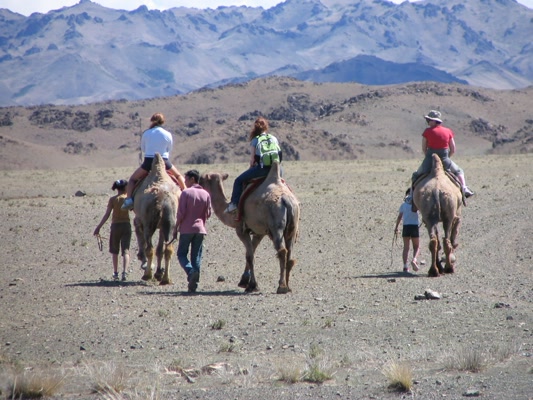
Once done hosting in the ger her children led us outside to ride the camels. Mine was very friendly, although the other two whined consistently. They had all recently been shaved to make clothing and bedding as well as cool them, so they did look rather funny. It was a wonderful experience to ride a camel in the Gobi, so high above the ground yet comfortable and relaxing. The other camels we saw later on also took on this air of complacency with the world around them, even in their patchy shaved fur.
Near our camp the land is rocky, not far from the mountain range. As we drove to the sandy dunes approximately sixty kilometers away, I noticed the rocks becoming smaller in size that would eventually turn to sand. Looking out the land here is always flat but it never goes on forever. Somehow the mountains always seem to contain the plains, cradling whatever life can grow.
I find the bushes amusing because not only does the plant grow up, but it looks as if it pushes the earth up with it, so very tiny bumps dot the landscape at times. This also happened right before reaching the sand dunes, seen in the distance for quite some time before we actually reached them. The dunes themselves were few as we had only reached the beginning of the sandy region, but the heat was impressive and the walk to and up the dune taxing.
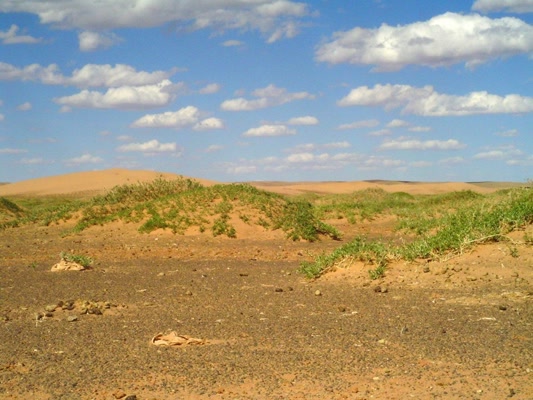
It was beautiful, the sight and view from the top. The sand brought a desire for water, an ocean to which the dune was the red carpet leading the way. Unfortunately no prize or ruby slippers were to be found on the other side of this "yellow-brick" road, instead a quick sandy drop everyone slid down and ran back up. Truly the Gobi is much more diverse than any of us had imagined.